

Junior White Belts & Junior 1 (Purple Stripe)
Questions and Answers
- 1What is the name of the training hall in Korean?
Dojang
- 2What is the name of your belt in Korean?
Ti
- 3What is the name of your training suit in Korean?
Dobok
- 4What is the name of your instructors?
Mr Burdock, Mr Hamill & Mr Norton
- 5How do you address people in the Dojang?
Sir or Ma’am
- 6What must you do when entering or leaving the Dojang?
Bow

10th Kup (White Belt Adult) or Junior 2 (Orange Stripe)
Name of Patterns (pre-arranged movements): Saju Jirugi 1 & 2 & Saju Makgi
Number of Movements in each pattern: 14
What is the meaning of Pattern: Four direction punch (Saju Jiruigi) and 4 directional block (Saju Makgi)
Advancement: These sets of pre-arrange movements are required to advance from 10th Kup White Belt or Orange Stripe to 9th Kup White Belt with Yellow
Questions and Answers
- 1How does Taekwon-Do translate from Korean?
The Art of Foot and Hand
- 2Which country did Taekwon-do come from?
Korea
- 3What date did Taekwon-Do start?
11th April 1955
- 4Who is the founder of Taekwon-Do?
Grand Master General Choi 9th Dan
- 5What are the ‘tenets’ of Taekwon-Do?
Courtesy, Integrity, Perseverance, Self Control and Indomitable Spirit
- 6What does the white belt signify?
Signifies innocence. No previous knowledge of Taekwon-Do, as that of a beginner student.
- 7What is Stance in Korean?
Sogi
- 8What is Punch in Korean?
Jirugi
- 9How high should your fist be in a middle block or punch?
Shoulder level
- 10How high should your fist be in a high block or punch?
Eye level

9th Kup (White with Yellow Tag Belt)
Name of Pattern : Chon-Ji Number of Movements : 19
Advancement: This is the pattern required to advance from 9th Kup White Belt with Yellow Tag to 8th Kup Yellow Belt.
Meaning of Pattern: Literally means Heaven and Earth. In the orient it is interpreted as the creation of the world or the beginning of human history, therefore it is the first pattern learnt by a beginner. The pattern consists of two similar parts, one representing the Heaven and the other the Earth.
Questions and Answers
- 1What is a pattern?
A pattern is a set of movements both defensive and offensive against an imaginary opponent.
- 2What is the meaning of Chon-Ji?
The Heaven, the Earth.
- 3How many movements are there in Chon-Ji?
19
- 4What is the shape of the pattern followed?
+
- 5What is Attention stance in Korean?
Charyot sogi
- 6What is Sitting stance in Korean?
Annun sogi
- 7What is Walking stance in Korean?
Gunnun sogi
- 8What is Parallel stance in Korean?
Narani sogi
- 9What is L-stance in Korean?
Niunja sogi
- 10What is High, Middle and Low in Korean?
Napunde, Kaunde, Najunde
High – above shoulder level
Middle-shoulder level to waist
Low – below waist level
THEORY FOR PRIEVIOUS GRADES SHOULD BE REVISED

8th Kup (Yellow Belt)
Name of Pattern : Dan-Gun Number of Movements : 21
Advancement: This is the pattern required to advance from 8th Kup Yellow Belt to 7th Kup Yellow Belt with Green Tag.
Meaning of Pattern: Dan Gun is named after the Holy Dan Gun, the legendary founder of Korea in the year 2333 BC.
Questions and Answers
- 1Whom is pattern named after?
Dan-Gun
- 2How many movements are there in Dan-Gun?
21
- 3What is the shape of the pattern followed?
I
- 4What is meaning of pattern Dan-Gun?
Dan-Gun is named after the Holy Dan Gun, the legendary founder of Korea in the year 2333 BC.
- 5What does the yellow belt represent?
Represents the earth where the seed of Taekwon-Do is planted as the foundation of Taekwon-Do is being laid.
- 6Korean Terminology: What is?
Middle Punch? Kaunde Jirugi
High Punch? Nopunde Jirugi
Low Block? Najunde Makgi
Middle Block? Kaunde Makgi
High Block? Nopunde Makgi
Rising Block? Chookyo Makgi
Guarding Block? Daebi Makgi
Twin Block? Sang Makgi
Kick? Chagi
Strike? Taerigi
Thrust? Tulgi
THEORY FOR PRIEVIOUS GRADES SHOULD BE REVISED

7th Kup (Yellow Belt with Green Tag)
Name of Pattern : Do-San Number of Movements : 24
Advancement: This is the pattern required to advance from 7th Kup Yellow Belt with Green Stripe to 6th Kup Green Belt.
Meaning of Pattern: Do San is the pseudonym for the patriot Ahn Chango-Ho (1876 to 1938). The 24 movements in this pattern represent his entire life, which he devoted to furthering the education of Korea and it’s independence movement.
Questions and Answers
- 1Whom is pattern named after?
Do-San
- 2How many movements are there in Do-San?
24
- 3What is meaning of Pattern Do-San?
Do San is the pseudonym for the patriot Ahn Chango-Ho (1876 to 1938).
- 4What diagram does the pattern followed?
I
- 5Korean Terminology: What is?
Front Kick? Ap Chagi
Side Kick? Yop Chagi
Turning Kick? Dollyo Chagi
Back Kick? Dwit Chagi
Fore-fist? Ap Joomuk
Back-fist? Dung Joomuk
Knife-hand? Sonkal
Fingertip? Sonkut
Inner Forearm? An Palmok
Outer Forearm? Bakat Palmok
Ball of the foot? Ap Kumchi
Foot-sword? Balkal
THEORY FOR PRIEVIOUS GRADES SHOULD BE REVISED

6th Kup (Green Belt)
Name of Pattern : Won-Hyo Number of Movements : 28
Advancement: This is the pattern required to advance from 6th Kup Green Belt to 5th Kup Green Belt with Blue Tag.
Meaning of Pattern: Won Hyo was the noted monk who introduced Buddhism to the Silla Dynasty of Korea in the year 686 AD.
Questions and Answers
- 1Whom is pattern named after?
Won-Hyo
- 2How many movements are there in Won-Hyo?
28
- 3What is the meaning of Pattern Won-Hyo
Won Hyo was the noted monk who introduced Buddhism to the Silla Dynasty of Korea in the year 686 AD.
- 4What is the shape of the pattern followed?
I
- 5What does the green belt represent?
Green signifies a plants growth as Taekwon-do skills begin to develop.
- 6Korean Terminology: What is?
Close ready stance? Moa Junbi Sogi
Fixed Stance? Gojang Sogi
Bending Ready Stance? Guburyo Junbi Sogi
Circular Block? Dollymyo Makgi
Wedging Block? Hechyo Makgi
Knife-hand Side Strike? Sonkal Yop Taerigi
Flat Fingertip Thrust? Opun Sonkut Tulgi
Straight Fingertip Thrust? Sun Sonkut Tulgi
Crescent Kick? Bandal Chagi
Hooking Kick? Golcho Chagi
Inward? Anuro
Outward? Bakuro
THEORY FOR PRIEVIOUS GRADES SHOULD BE REVISED
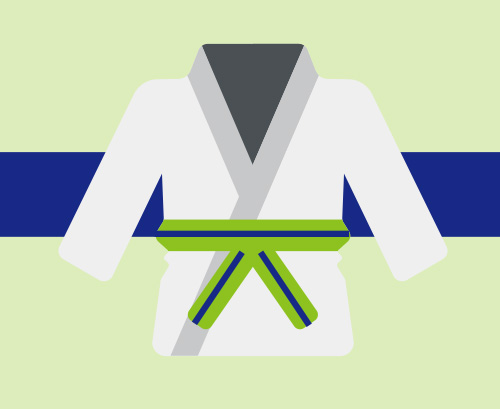
5th Kup (Green Belt with Blue Stripe)
Name of Pattern : Yul-Gok Number of Movements : 38
Advancement: This is the pattern required to advance from 5th Kup Green Belt with Blue Tag to 4th Kup Blue Belt.
Meaning of Pattern: Yul Gok is the pseudonym of the great philospher and teacher Yi I (1536 to 1584). He was nicknamed the Confucius of Korea. The 38 movements of this pattern refer to his birthplace on the 38th degree latitude and the diagram represents Scholar.
Questions and Answers
- 1Whom is pattern named after?
Yul Gok
- 2How many movements are there in Yul-Gok?
38
- 3What is the shape of the pattern followed?
±
- 4Korean Terminology: What is?
X Stance? Kyocha Sogi
Palm Hooking Block? Sonbadak Golcho Makgi
Front Elbow Strike? Ap Palkup Taerigi
Reverse Turning Kick? Bandae Dollyo Chagi
Back-fist Side Strike? Dung Joomuk Yop Taerigi
Double Forearm Block? Doo Palmok Makgi
Sparring? Matsogi
Obverse? Baro
Reverse? Bandae
THEORY FOR PRIEVIOUS GRADES SHOULD BE REVISED

4th Kup (Blue Belt)
Name of Pattern : Joong-Gun Number of Movements : 32
Advancement: This is the pattern required to advance from 4th Kup Blue Belt to 3rd Kup Blue Belt with Red Tag.
Meaning of Pattern: Joong Gun is named after the patriot Ahn Joong Gun who assassinated Hiro Bumi Ito, the first Japanese governor general of Korea, who played a leading part in the Korea-Japan Merger. The 32 movements in this pattern represent Ahn Joong Gun’s age when he was executed at Lui-Shing prison in 1910.
Questions and Answers
- 1Whom is pattern named after?
Joong-Gun
- 2How many moves in pattern Joong-Gun?
32
- 3What is the meaning of pattern Joong-Gun?
Joong Gun is named after the patriot Ahn Joong Gun who assassinated Hiro Bumi Ito, the first Japanese governor general of Korea, who played a leading part in the Korea-Japan Merger.
- 4What does Blue Belt signify?
Signifies the sky and the heavens, towards which the tree grows as Taekwon-Do training progresses.
- 5Korean Terminology: What is?
Close Ready Stance Type B? Moa Junbi Sogi B
Rear Foot Stance? Dwit Bal Sogi
Reverse Knife-hand Middle Block? Sonkal Dung Kaunde Makgi
Low Side Front Snap Kick? Najunde Yobap Cha Busigi
Twin Fist Upset Punch? Sang Joomuk Dwijibo Jirugi
X-Fist Rising Block? Kyocha Joomuk Chookyo Makgi
Angle Punch? Giokja Makgi
U-Shape Block? Digutja Makgi
Upset Fingertip Low Thrust? Dwijibun Sonkut Najunde Tulgi
Foot Shifting? Jajun Bal
3 Step Semi Free Sparring? Ban Jayoo Matsogi
1 Step Sparring? Ilbo Matsogi
Slow Motion? Chonchonhi
THEORY FOR PRIEVIOUS GRADES SHOULD BE REVISED
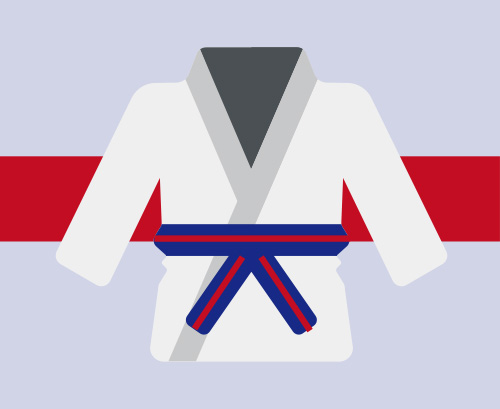
3rd Kup (Blue Belt with Red Stripe)
Name of Pattern : Toi-Gye Number of Movements : 37
Advancement: This is the pattern required to advance from 3rd Kup Blue Belt with Red Tag to 2nd Kup Red Belt.
Meaning of Pattern: Toi Gye is the pseudonym of the noted scholar Yi Hwang (16th century), an authority on neo-Confucianism. The 37 movements represent his birthplace on the 37th degree latitude and the diagram represents scholar.
Questions and Answers
- 1Whom is pattern named after?
Toi-Gye
- 2How many moves in pattern Toi-Gye?
37
- 3Korean Terminology: What is?
Backfist Side Back Strike? Dung Joomok Yopdwi Taerigi
Twin Side Elbow Thrust? Sang Yop Palkup Tulgi
Double Forearm Low Pushing Block? Doo Palmok Najunde Miro Makgi?
Knife-hand Low Guarding Block? Sonkal Najunde Daebi Makgi
Outer Forearm W-Shape Block? Bakat Palmok San Makgi
Upward Punch? Ollyo Jirugi
Flying Side Kick? Twimyo Yop Chagi
Twisting Kick? Bituro Chagi
Pressing Kick? Noollo Chagi
Reverse Hooking Kick? Bandae Dollyo Goro Chagi
Downward Kick? Naeryo Chagi
THEORY FOR PRIEVIOUS GRADES SHOULD BE REVISED
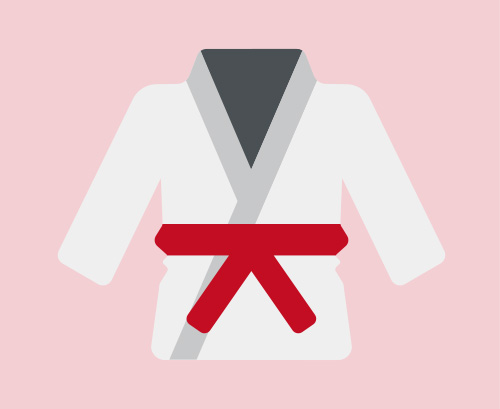
2nd Kup (Red Belt)
Name of Pattern : Hwa-Rang Number of Movements : 29
Advancement: This is the pattern required to advance from 2nd Kup Red Belt to 1st Kup Red Belt with Black Tag.
Meaning of Pattern: Hwa Rang is named after the Hwa Rang youth group that originated in the Silla dynasty in the early 7th century. The 29 movements refer to the 29th Infantry Division commanded by General Choi in 1953 where Taekwon-Do was developed into maturity.
Questions and Answers
- 1Whom is pattern named after?
Hwa-rang
- 2What does the pattern mean?
Hwa Rang is named after the Hwa Rang youth group that originated in the Silla dynasty in the early 7th century.
- 3How many moves in pattern Hwa-Rang?
29
- 4What does red belt signify?
Signifies danger, cautioning the student to exercise control, and warning an opponent to stay away.
- 5Korean Terminology: What is?
Close Ready Stance Type C? Moa Junbi Sogi C
Vertical Stance? Soojik Sogi
Palm Pushing Block? Sonbadak Miro Makgi
Knife-hand Side Downward Strike? Sonkal Yop Naeryo Taerigi
Side Elbow Thrust? Yop Palkup Tulgi
Side Front Block? Yobap Makgi
Stepping? Omgyo Didigi
Flying Reverse Turning Kick? Twimyo Bandae Dollyo Chagi
THEORY FOR PRIEVIOUS GRADES SHOULD BE REVISED
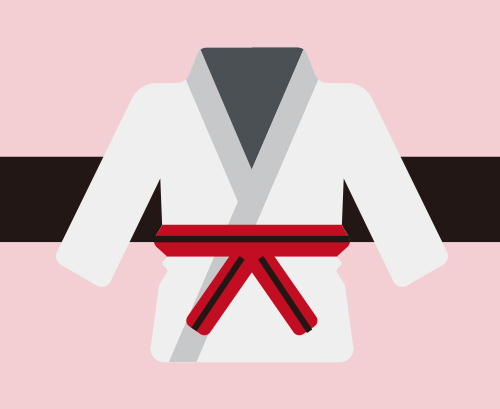
1st Kup (Red Belt with Black Stripe)
Name of Pattern : Choong-Moo Number of Movements : 30
Advancement: This is the pattern required to advance from 1st Kup Red Belt with Black Tag to 1st Degree Black Belt.
Meaning of Pattern: Was the name given to the great Admiral Yi Soon-Sin of the Yi Dynasty. He was reported to have invented the first armoured battleship (kobukson) in 1592, which is said to have been the precursor of the present day submarine. The pattern ends with a left-hand attack symbolising his regrettable death. He was never allowed to reach his full potential as he was forced to be loyal to the king.
Questions and Answers
- 1Whom is pattern named after?
Admiral Yi Soon-Sin
- 2How many moves in pattern Choong-Moo?
30
- 3What is the meaning of pattern Choong-Moo?
Was the name given to the great Admiral Yi Soon-Sin of the Yi Dynasty. He was reported to have invented the first armoured battleship (kobukson) in 1592, which is said to have been the precursor of the present day submarine. The pattern ends with a left-hand attack symbolising his regrettable death. He was never allowed to reach his full potential as he was forced to be loyal to the king.
- 4What does Black Belt signify?
The opposite of white, therefore signifying a maturity and proficiency in Taekwon-Do. It also indicates the holder’s imperviousness to darkness and fear.
- 5Why are there 24 patterns?
Research this to find the answer
- 6Why do you deserve a Black Belt?
You need to prepare an answer.
- 7If you had to name a 6th Tenet for Taekwon-do, what would it be? And why?
You need to prepare an answer.
- 8Korean Terminology
Name every move you completed in 1 Step Sparring in Korean.
THEORY FOR PRIEVIOUS GRADES SHOULD BE REVISED